
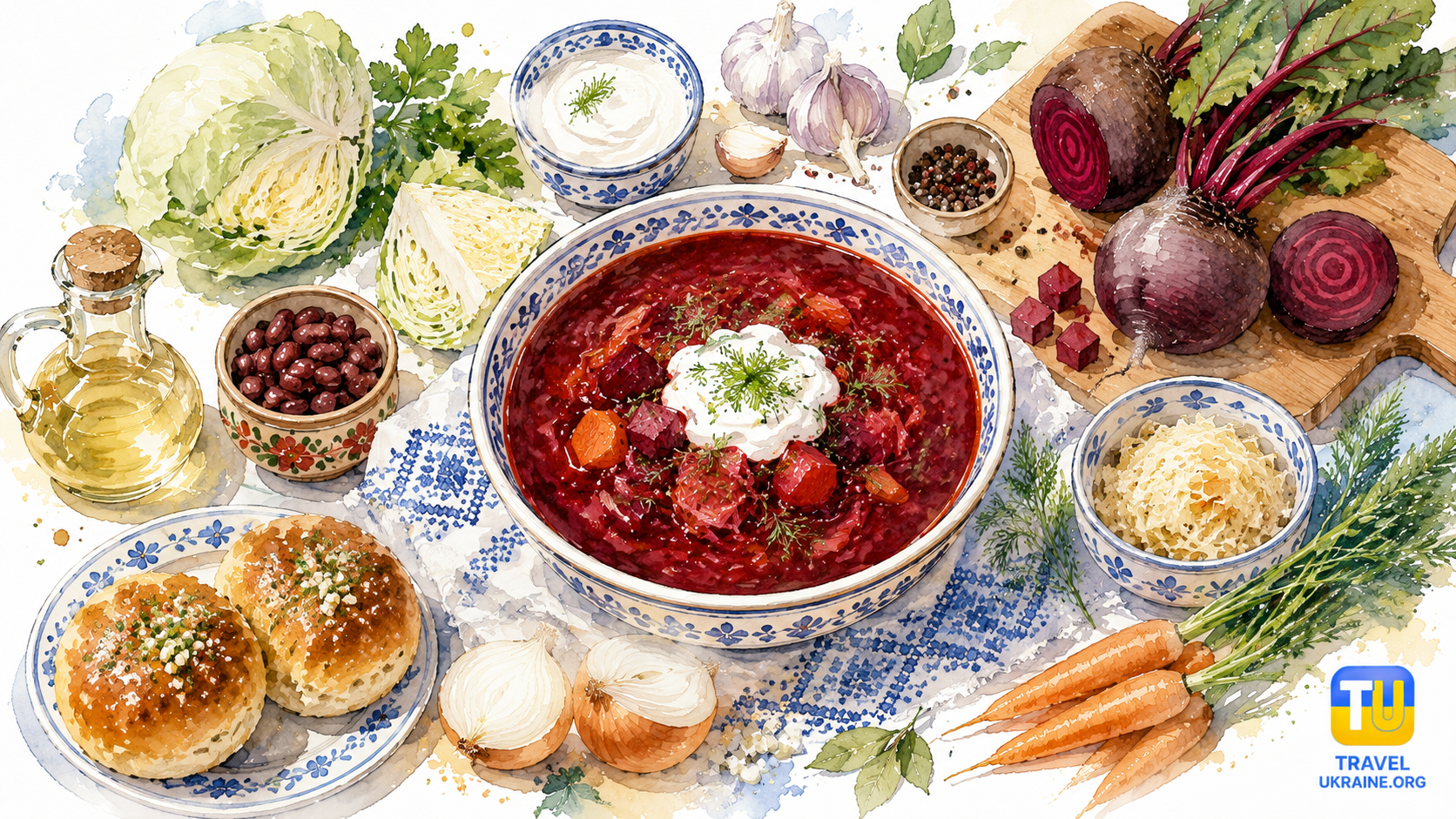
UNESCO added the culture of Ukrainian borshch cooking to its Intangible Cultural Heritage list in 2022.
A good bowl of Ukrainian borshch is never only red beet soup. It carries the sweetness of root vegetables, the sharpness of tomatoes or vinegar, the softness of cabbage and potatoes, and the familiar finish of garlic, dill, and sour cream. In many Ukrainian homes, it is the dish that appears for ordinary lunches, family visits, holidays, and long conversations at the table.
Why Borshch Matters in Ukrainian Culture
Borshch is one of the clearest examples of Ukrainian food culture: seasonal, practical, generous, and deeply local. It uses vegetables that grow well in Ukrainian soil, especially beets, cabbage, potatoes, carrots, onions, and garlic. It also reflects the Ukrainian habit of building flavor patiently: broth first, then vegetables, then acidity, then herbs.
In 2022, UNESCO inscribed the culture of Ukrainian borshch cooking on its List of Intangible Cultural Heritage in Need of Urgent Safeguarding. The recognition was not about claiming that no one else cooks borshch. It recognized the specific role borshch plays in Ukrainian life, family memory, regional cooking, and cultural continuity.
For travelers, borshch is one of the easiest dishes through which to understand Ukraine. Order it in Kyiv, Lviv, Odesa, Poltava, Chernihiv, or a village guesthouse and you may receive a different bowl each time. Some versions are bright and tomato-forward. Some are earthy and beet-rich. Some include beans, smoked pears, mushrooms, pork ribs, beef, poultry, or little garlic rolls called pampushky.
The word “borshch” originally connects to an older sour soup made with hogweed, before beet-based borshch became dominant.
What Is Ukrainian Borshch?
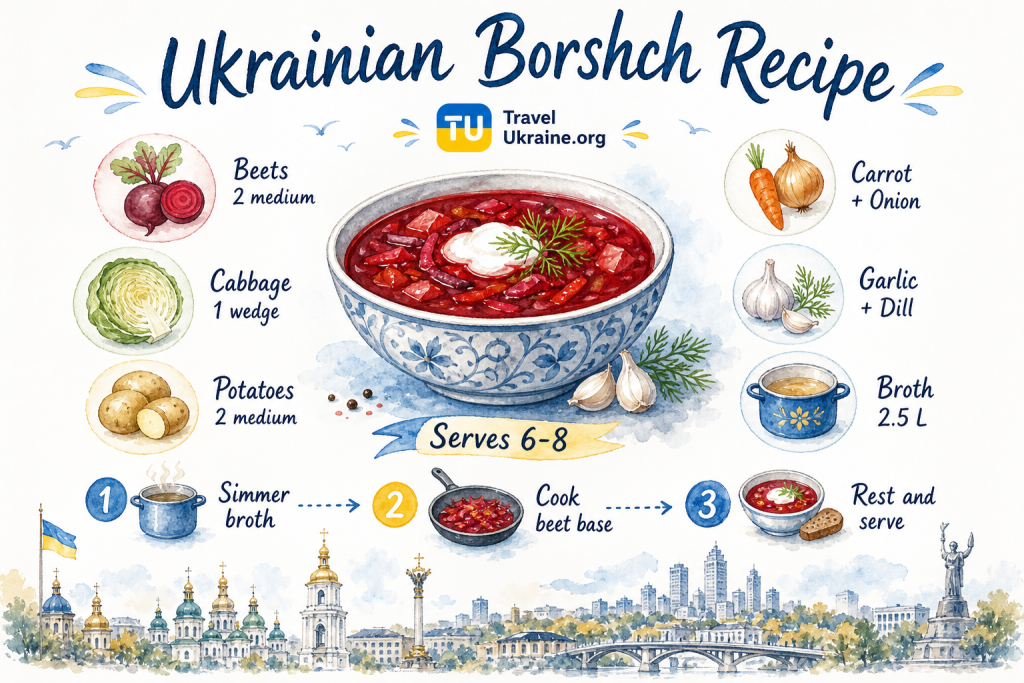
Ukrainian borshch is a hearty sour soup most commonly associated with red beets. A classic bowl usually includes:
– Beets for color, sweetness, and earthiness
– Cabbage for body
– Potatoes for softness and substance
– Carrots and onions for sweetness
– Tomato paste, tomatoes, vinegar, lemon juice, or beet kvas for acidity
– Broth, often meat-based, though vegetarian versions are common
– Garlic, dill, bay leaf, and black pepper for aroma
– Sour cream or smetana to serve
The balance matters. Good borshch should not taste flat or sugary. It should have depth from the broth, sweetness from the vegetables, a clean sour note, and freshness from herbs and garlic.
Regional and Family Variations
There is no single Ukrainian borshch recipe. That is part of its importance.
In some parts of Ukraine, beans make the soup more filling. Around Poltava, poultry may appear in the broth. In western regions, dried mushrooms or smoked ingredients can add depth. In the south, tomatoes and peppers often bring a warmer, brighter flavor. During fasting periods, meatless versions made with beans, mushrooms, fish, or vegetable stock are common.
Borshch is not just one soup. In Ukraine, almost every region and many families have their own version.
Classic Ukrainian Borshch Recipe
Even inside one family, the recipe can change by season. Summer borshch may be lighter and more tomato-forward. Winter borshch can be thicker, richer, and cooked with stored root vegetables. Some cooks grate the beets; others cut them into matchsticks. Some add vinegar early to preserve the red color; others rely on tomatoes or fermented beet kvas.
This version is designed for a home kitchen and keeps the spirit of a traditional Ukrainian red borshch: hearty, bright, and balanced.
Ingredients
Method
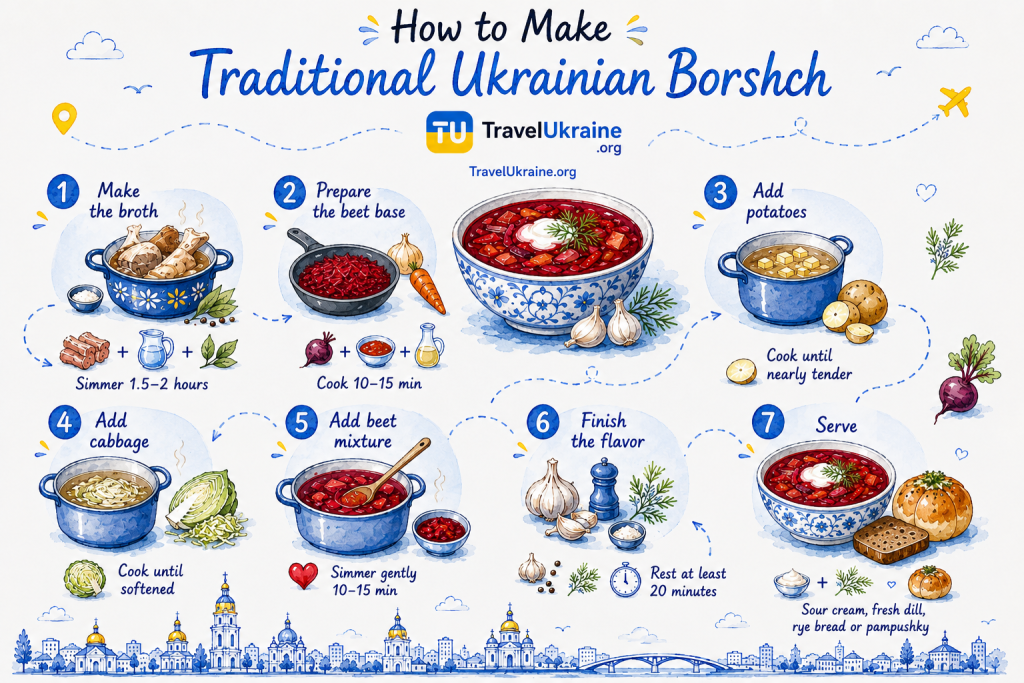
1. Make the broth. Put the meat or bones in a large pot with water, bay leaves, and a little salt. Simmer gently until the broth has flavor, about 1.5 to 2 hours for meat or longer for bones. Skim foam as needed.
2. Prepare the beet base. In a pan, warm the oil and cook the onion and carrot until soft. Add the beets, tomato paste or tomatoes, and vinegar or lemon juice. Cook for 10 to 15 minutes, stirring often. Add a splash of broth if the pan gets dry.
3. Build the soup. Remove the cooked meat from the pot, cut it into bite-sized pieces, and return it to the broth. Add potatoes and cook until nearly tender.
4. Add cabbage. Stir in the shredded cabbage and cook until softened but not mushy.
5. Add the beet mixture. Stir the beet base into the pot and simmer gently for 10 to 15 minutes. Do not boil hard after adding the beets; gentle heat helps preserve the color.
6. Finish the flavor. Add crushed garlic, black pepper, salt, and more acidity if needed. Let the borshch rest for at least 20 minutes before serving; many cooks prefer it the next day.
7. Serve. Ladle into bowls with sour cream, fresh dill, rye bread, or garlic pampushky.
Borshch Cooking Tips
– Use acidity carefully. Vinegar, lemon juice, tomato, or beet kvas keeps the soup bright and balances the sweetness of beets.
– Let it rest. Borshch usually tastes deeper after the flavors settle.
– Do not overcook the cabbage. It should soften but still have structure.
– Adjust, do not chase one fixed recipe. Ukrainian borshch is a family dish, so small variations are part of the tradition.
– Serve with bread. Rye bread, sourdough, or pampushky make the bowl feel complete.
Garlic pampushky are one of the most classic Ukrainian sides for borshch.
What to Serve With Borshch
The classic pairing is sour cream and dill. Many Ukrainian tables also include rye bread, garlic pampushky, salo, pickles, spring onions, or fresh garlic. In restaurants, borshch may arrive with a small side of bread and smetana; in homes, it often becomes the center of a larger meal.
Recommended Recipe Videos
For readers who want to watch the technique, these links are useful starting points:
– Yevhen Klopotenko borshch recipe
Practical Tips for Travelers
– Try borshch in more than one city; the differences are part of the experience.
– If you do not eat meat, ask for vegetarian or mushroom borshch.
– In Ukrainian restaurants, borshch may be listed as “borsch,” “borshch,” or “borscht” in English.
– Support Ukrainian-owned restaurants, bakeries, and food producers when traveling or ordering abroad.
– Check current travel guidance before planning any trip to Ukraine.
FAQ
Borshch is cooked across several Eastern and Central European food traditions, but the culture of Ukrainian borshch cooking has a specific place in Ukrainian family life, regional cuisine, and national identity. UNESCO recognized this Ukrainian culinary tradition in 2022.
Beets give red borshch its color. Tomato, vinegar, lemon juice, or beet kvas can help keep the color bright while balancing the sweetness.
No. Many Ukrainian versions are meatless, especially during fasting periods. Vegetarian borshch can be made with beans, mushrooms, vegetable stock, or dried fruit for depth.
Beet soup can be simple and beet-focused. Ukrainian borshch is usually more layered, with cabbage, potatoes, carrots, onion, tomato or souring agents, herbs, broth, and regional additions.
Common sides include sour cream, dill, rye bread, garlic pampushky, pickles, salo, spring onions, and fresh garlic.
Fun Facts About Borshch
- Borshch can be hot or cold, thick or light, meat-based or vegetarian.
- Chef Yevhen Klopotenko helped document Ukrainian borshch traditions from across the country and campaigned for UNESCO recognition.
- Some historical versions were made with fish during fasting periods.
- Borshch often tastes better the next day because the vegetables, broth, acidity, garlic, and herbs have time to settle together.
Types of Borshch
- Red borshch: The classic beet-based version, usually with cabbage, potatoes, carrot, onion, tomato, garlic, dill, and broth.
- Green borshch: A spring-style sorrel soup, often served with hard-boiled egg and sour cream. It may use sorrel, spinach, nettle, chard, or other greens.
- Cold borshch: A chilled beet soup mixed with sour dairy such as kefir, yogurt, sour cream, or soured milk, often served with egg.
- White borshch: A regional name for different sour soups; in southern Podilia, it can be made with fresh sugar beets, beans, and vegetables.
- Lenten borshch: A meatless version often made with beans, mushrooms, fish, or vegetable stock.
- Regional Ukrainian borshch: Kyiv-style may include lamb or mutton; Poltava-style may use poultry; Chernihiv-style can include beans, zucchini, and tart apples; southern versions often include legumes.
Five Kyiv Restaurants To Try Borshch
- 100 Rokiv Tomu Vpered
Best for: modern Ukrainian cuisine and borshch as cultural storytelling.
Why: Yevhen Klopotenko’s Kyiv restaurant focuses on reviving pre-Soviet Ukrainian cuisine. - Pervak
Best for: classic Ukrainian restaurant atmosphere near central Kyiv.
Why: The official site specifically highlights aromatic borsch, dumplings, lard, and traditional Chicken Kyiv. - Kanapa
Best for: refined Ukrainian cuisine on Andriivskyi Descent.
Why: A strong option for visitors who want Ukrainian classics in a more polished restaurant setting. - Ostannya Barykada
Best for: Ukrainian-only ingredients and a patriotic Kyiv dining experience.
Why: Good fit for readers interested in Ukrainian identity, local products, and modern national cuisine. - Korchma Taras Bulba
Best for: traditional tavern-style Ukrainian food.
Why: Its menu is associated with nourishing borshch with pampushky and other Ukrainian staples.
Add a note before the restaurant list: “Menus and opening hours can change, especially during wartime, so check the restaurant’s current page before visiting.”
Final Thoughts
Borshch is one of the dishes through which Ukraine explains itself quietly: vegetables from the garden, broth on the stove, garlic crushed at the end, and a table where one more person can always be fed. To understand Ukrainian food, start with the bowl, then listen for the family story behind it